Understanding Ilford Delta 3200: Insights from Years of Usage and Development Techniques
| Shelf | Cameras & Lenses |
|---|---|
| Date in | |
| Readers | 337 |
Explore the detailed characteristics of Ilford Delta 3200 film, including its exposure index, development techniques, and practical shooting tips for photographers.
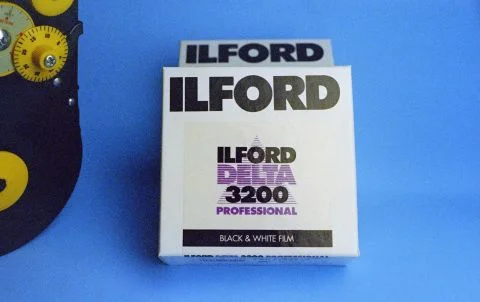
Ilford Delta 3200 Professional is a notable black-and-white film praised for its incredible sensitivity, making it ideal for shooting in low-light and fast-action situations. In particular, its utility shines in the oftentimes gloomy and rainy backdrop of British Columbia, where many photographers seek a dependable high-speed option. Personally, I often rely on it for capturing quick-moving pets, where a fast shutter speed is vital to avoid motion blur.
Available in 35mm (only 36 exposures), medium format, and bulk rolls of 100’, Ilford exhibits excellent distribution networks, securing easy access to this film worldwide, including in local drugstore chains that also provide film development services. Over the past six years, I have shot Delta 3200 with various classic cameras including the Hasselblad XPan, Nikonos V, Nikon F3, and Voigtländer Vitessa A. My experiments have encompassed multiple exposure settings and development techniques using Rodinal, Ilford DD-X, and Kodak HC-110, providing a comprehensive base for this review.
Is the ISO 3200 Real?
Ilford designed Delta 3200 to be effectively exposed at ISO 3200. However, tests reveal its actual measured ISO is around 1000. This discrepancy stems from the fact that the "ISO" designation is a suggested exposure index (EI) configured with corresponding development times. Lowering the EI does not yield finer grain or improved contrast, as the film is engineered for speed.
Development times range from EI 400 to 12800, but for this review, I’ll focus primarily on the standard 3200 and 1600 settings.
Resolution and Sharpness
Since fewer photons reach the photosensitive chemicals on the film, the larger clumping of these grains results in a characteristic graininess synonymous with Delta 3200. The film features T-Grain technology, essential in minimizing apparent grain size. Without it, the grain would have been significantly more pronounced, as can be seen in non-T-Grain films developed to extremely high ISO levels.
Scanned at high-resolution using a Nikon SUPER COOLSCAN 5000ED, images retain an impressive sharpness. When viewed on larger screens, the individual granules notably stand out, giving a "crunchy" look to details, which speaks to the film's capable resolution despite its grain.
Interestingly, the choice of developer greatly influences the appearance of grain. My images developed in Rodinal highlight a stable, sharp look, while those processed in Ilford DD-X render smoother, less pronounced grain structures that offer a more pleasant viewing experience. In fact, when compared directly, images developed in Kodak HC-110 exhibited the highest graininess.
Dynamic Range and Contrast
When developing Delta 3200, the film showcases a consistent performance in terms of contrast and dynamic range. According to Ilford’s datasheet, a slight density increase is observable with longer development times, resulting in greater contrast at higher exposure indices. This behavior is particularly pronounced under various lighting conditions.
The film captures about 12-13 stops of dynamic range, making it slightly above average relative to other black-and-white films I’ve evaluated. Notably, it retains solid shadow detail even under high-contrast situations, as I discovered while photographing Moscow subway stations for my book several years ago.
Ilford Delta 3200 in DD-X
The perception of grain has undergone a transformation in photography. Historically, grain was often seen as a flaw, but modern sensibilities have embraced the character it imparts. Research indicates that grainy images are frequently perceived as sharper, contributing to their artistic allure.
With this in mind, using Ilford DD-X for processing Delta 3200 yields some of the smoothest grain results I’ve encountered. Though grain remains present, the transition between particles is rendered more pleasingly uniform, offering a textural quality that does not dominate the image, unlike the coarse grain produced by Rodinal or HC-110.
Ilford Delta 3200 EI 1600 in Rodinal
Curiosity about whether exposing Delta 3200 at EI 1600 could reduce grain is tempting. Yet, my findings displayed little to no difference. Despite the increased light sensitivity from doubling the light hitting the emulsion, the shadows appeared murkier than at box speed. Such outcomes underline the complexity of photochemistry — pull-processing does not necessarily alleviate grain size, even under different exposure scenarios.
Ilford Delta 3200 in Rodinal
Processed at box speed, images reveal a level of graininess that some may find charming, though it is more evident than when processed in DD-X. That said, I maintain a preference for the clarity achieved with Rodinal at box speed versus the muddiness encountered at EI 1600. My 35mm samples illustrate a respectable look, and images from medium format cameras present an even finer display.
Ilford Delta 3200 in Kodak HC-110
HC-110 remains a developer I had long desired to experiment with, so I decided to process some Delta 3200 with it using Dilution A (1+15). However, these results could be best described as unexpected; the film's grain appeared excessive and left noisy shadows that can dominate the visual narrative of the images.
In print, the coarse grain might not translate favorably unless looked at with intention. While stark grain can evoke a pointillistic quality reminiscent of paintings, it contrasted poorly with my long-held expectations for this film when paired with HC-110.
Scanning, Editing, and Restoring Highlights
Editing techniques play a significant role in how the grain is perceived. With films developed in Rodinal and DD-X, one can exert considerable control over contrast levels, enhancing shadow detail and capable of tempering highlights. Conversely, images processed in HC-110 are notoriously less amenable to adjustments, resulting in a desire to retain clarity without excessive grain cluttering the details.
Scanning Delta 3200 is generally straightforward, as the film base color is a neutral grey. This neutral characteristic means it doesn't require extensive correction during digitization; however, the base is not entirely clear, necessitating careful inversion techniques to ensure accurate color representation.
Price and Availability
Pricing for Delta 3200 positions it as slightly pricey, currently retailing at about $16.50 USD per roll in 2026. Despite its cost, it remains accessible compared to many premium color films, retaining consistent stock levels across retailers specializing in black-and-white film.
Overall, Ilford Delta 3200 offers a flexible platform for photographers seeking both speed and distinctive character in their monochrome imagery.