A Comprehensive Comparison of ISO 100 Colour-Negative Films: A Deep Dive into Seven Stocks
| Shelf | Cameras & Lenses |
|---|---|
| Date in | |
| Readers | 531 |
Explore the characteristics and performance of seven ISO 100 colour-negative films, highlighting differences in exposure handling and image quality.
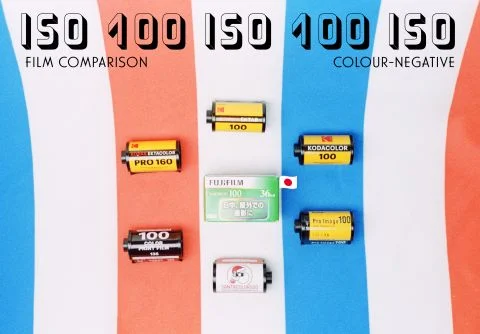
Manufacturing colour-negative film is a complex process, with only six facilities worldwide capable of producing it today. Among these, just two factories are associated with ISO 100 colour-negative films. Kodak is responsible for Ektacolor Pro/Portra 160, Ektar 100, Kodacolor 100, and Pro Image 100, while Aerocolor IV is produced under various brands, including Lomography, which offers its own version of ISO 100 film—though it's distinct from Aerocolor.
Exploring Limited Options
In an age dominated by digital photography, the ability to find quality film options is dwindling. One lesser-known option, Fujicolor 100, is exclusive to the Japanese market. Because of this exclusivity, many photographers and film enthusiasts outside of Japan may find this film challenging to access. I imported a roll to include it in this extensive examination of ISO 100 colour-negative films, aiming for a thorough comparative analysis of their qualities and performances. The irony lies in the fact that while digital photography proliferates, genuine film stocks like these are rapidly becoming rare commodities.
Differentiating Through Comparison
While much of the film in this evaluation comes from Kodak, differentiation between them is vital. Previous comparisons of ISO 800 colour-negative films demonstrated significant variance even when stemming from a singular manufacturer. The variations can be particularly pronounced in terms of color accuracy, grain structure, and tonal reproduction, aspects that can fundamentally alter the photographer's outcome. Thus, contrasting the Japan-only Fujicolor 100 with Kodak's offerings showcases noteworthy distinctions. Understanding these differences can significantly impact creative choices, especially for those dedicated to achieving specific visual styles.
Methodology
This evaluation adopts a systematic methodology, focusing on one-to-one scan comparisons to ensure consistency and accuracy in assessment. This disciplined approach is essential as biases can easily distort results when dealing with subjective mediums like film. I've worked diligently to eliminate those biases, presenting the comparative results transparently. The insights gained from lining up various films side by side have been both enlightening and surprising. It's fascinating, for instance, to see how some affordable films handle over- and underexposure compared to pricier counterparts. For example, Ektacolor Pro displayed a remarkable depth of red tones even when underexposed, a characteristic that’s essential for portraits where skin tones need to be rendered accurately.
The Films Under the Microscope
The films analyzed include:
- Aerocolor IV (rebranded as SantaColor 100)
- Fujicolor 100 (imported for this comparison)
- Ektacolor Pro/Portra 160
- Ektar 100
- Kodacolor 100
- Pro Image 100
- Lomography Color Negative 100.
Exposure Settings and Results
Each film was exposed to identical conditions, ensuring consistent lighting from an Amaran F21x fixture. I aimed my shots at a mirror selfie featuring my facial skin tone, a reliable indicator of film quality. A Datacolor Spyder Checkr was included for comparative analysis, as well as a scene incorporating primary colours. Maintaining consistent lighting is paramount; even slight variations can lead to misrepresentations in the final photographs.
For exposure settings, I utilized a controlled range to highlight each film's performance under various conditions. I employed normal exposure settings along with adjustments for overexposing and underexposing by two stops. Identifying results in this manner revealed the unique strengths and weaknesses of each stock more effectively, as single-stop variances can be subtle and often hidden. Notably, these adjustments serve to expose each film stock's nuances, helping photographers understand how they might behave in real-world shooting scenarios.
Each shot maintained constant aperture settings; changes were made solely to shutter speed. While this might have complicated some frames due to requiring shutter speeds of 1/30th at f2.0, it contributed to the uniformity of the images produced. That said, the constant aperture means you're really able to study how each film ultimately handles color and detail at its rated ISO.
Notably, I included Kodak Ektacolor Pro 160 in this evaluation despite its designation. Its performance characteristics align closely with ISO 100 films, which helps in making fair comparisons. Utilized settings remained consistent throughout the comparison: f2.0 at 1/500s for -2 stops, f2.0 at 1/125s for normal exposure, and f2.0 at 1/30s for +2 stops—measuring normal exposures against an 18% grey reference from the colour chart.
Developed using a fresh batch of Flic Film C-41 16 Roll Pro Kit chemicals, I scanned everything with a Nikon SUPER COOLSCAN 5000 ED, utilizing VueScan to convert negatives to positives while employing neutral settings. This meticulous process ensured that any color casts or contrast deviations introduced during scanning were minimized. The results were saved as 16-bit TIFF files and inverted using film Q, followed by careful colour correction that preserved contrast.
Normal Exposure Results
To undertake a thorough analysis, I've grouped results methodically, focusing on six subsets—each consisting of films exposed under normal conditions against 18% middle grey from the colour chart. This first category features:
- Kodak Aerocolor IV
- Fujifilm Fujicolor 100
- Kodak Ektacolor Pro 160
- Kodak Ektar 100
This collection is especially varied: Aerocolor IV serves as a professional stock for aviation/forestry, Fujicolor stands alone as the only film not sourced from Kodak, Ektacolor Pro slightly exceeds ISO 100 sensitivity, and Ektar is renowned for its high contrast and fine grain. Each film in this set is tailored for different applications, which means they can yield different results depending on the shooting scenario.
Through careful observation, the differences in performance among these films reveal critical insights for both enthusiasts and professionals. Evaluating their strengths during practical use showcases how various films cater to unique photographic needs, whether it’s for capturing vibrant landscapes or subtle portraits. If you’re working in this space, understanding what each film can achieve is essential for post-exposure work as well.
Future Outlook: The Evolution of Film Photography
Amid increasing digital influence, the physical properties and practical applications of color-negative film remain crucial. As the market continues to shrink, the challenges in production only highlight the importance of these remaining stocks. In this environment, photographers must consider the implications of choice: will the limited varieties lead to uniformity in aesthetic, or can select stocks carve out a unique space within the photographic community? There’s an entire subculture dedicated to preserving film photography as a form of artistic expression; its survival may hinge on the appreciation for nuances within the limited remaining options. This makes informed choice more significant than it looks.
Ultimately, understanding the nuanced characteristics of each film type fosters informed decisions, empowering photographers to make choices aligned with their visual preferences and creative goals. This era of film photography demands both precision and passion.