Exploring the Legacy of the Nikon F: A Pioneering SLR Camera
| Shelf | Cameras & Lenses |
|---|---|
| Date in | |
| Readers | 719 |
The Nikon F, a trailblazer in SLR technology, seamlessly combines history and performance with enduring value, making it a classic choice for photographers today.
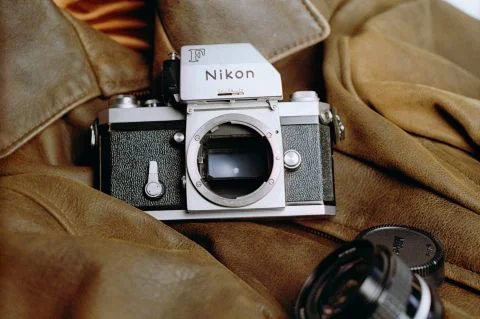
The Nikon F set the stage for a new era in photography as the first in a series of precision modular SLRs from Nikon, establishing the brand as a household name in the industry. This camera is known for its robust design and functionality, famously halting a bullet during a photojournalism endeavor, thereby saving a life. Its all-metal frame evokes memories of ruggedness, yet the technology embedded within was nothing short of revolutionary for its time, 1959, and much of its design philosophy still resonates in modern photography.
This review delves into the Nikon F's key features, its historical impact, and practical tips for photographers considering this classic camera as a daily shooter.
Technical Specifications
The production run of the Nikon F spanned from 1959 to 1973, with approximately 862,600 units produced. It was succeeded by the Nikon F2.
Lens Mount: Nikon F — pre-AI, requiring lenses with "rabbit ears" for proper metering.
Metering: Match-needle metering through the lens (TTL) was a standout feature at the time.
Focusing: The camera utilizes an SLR mechanism with interchangeable focusing screens.
Shutter: An all-mechanical titanium-curtain focal-plane shutter with speeds ranging from 1 to 1/1000 seconds. A unique shutter release cable was necessary for operation.
Batteries: Optional for the metering prism; modern replacements include the WeinCell MRB-625 for safe use.
Flash Sync: The Nikon F has a flash sync speed of 1/60 seconds, utilizing a PC sync cable or a cold shoe adapter.
Dimensions: The camera measures 146mm × 102mm × 95mm and weighs approximately 1049g (2.31lbs) with the Tn or FTn finder.
The camera was priced around $329.50 at launch with an Auto-Nikkor F2 and eye-level finder, equivalent to about $3,780 in 2026 dollars. By 1970, its cost rose to approximately $458.00, which translates to around $3,942 today.
A Place in History for the Nikon F
Regarded as one of the most significant cameras ever manufactured, the Nikon F played essential roles in various contexts, from the chaotic environments of the Vietnam War to the explorations of space. It's been reported that it literally saved a life by stopping a bullet. With its high price point, it offered exceptional value, merging quick operation with compatibility across various lenses and other photographic accessories.
The F offered a unique, light, and durable 0.02mm titanium shutter curtain, allowing for rapid shooting at a top speed of 1/1000s. Other features included instant mirror return, wide-open aperture composition for easier focusing, interchangeable viewfinders, and a robust bayonet-style lens mount. These factors contributed to a photography system faster and more reliable than many existing models at the time, which were constrained by their design limitations.
During its fourteen years in production, the Nikon F underwent significant evolution. Its initial models featured a cloth shutter rather than the innovative titanium foil curtain, as well as a detachable selenium meter for light metering. As developments improved, through-the-lens metering became standard in later models.
The F camera emerged during intense competition between German and Japanese manufacturers, primarily in the realm of rangefinder cameras. The design of the Nikon F exemplifies a transition from rangefinder to SLR with enhanced capabilities for macro and telephoto photography.
While Nikon gradually phased in the modern Z-mount lenses by the 2020s, the F-mount from 1959 remains the longest-lived standard in photographic history, boasting an expansive selection of over 400 Nikkor lenses and many more made by third-party manufacturers.
Build Quality
Renowned as the best-built SLR of its era, the Nikon F is still considered very solid and reliable decades later. Its significant heft and metal components reflect construction techniques of its time, recalling the sturdy design of devices like vintage tube radios.
The F has proven its durability under extreme conditions, although age can introduce wear that affects functionality, such as frame skipping. However, due to its all-mechanical design, it is generally easier to repair compared to more complex electronic models. A well-maintained Nikon F can serve its owner faithfully well into the future.
The F in Use: Design and Ergonomics
Despite its groundbreaking status, the Nikon F has its shortcomings. Some aspects, such as the unnecessarily placed film speed reminder on the bottom plate, lack integration with the metered prism. Additionally, loading film requires removing the back cover, a process slightly less convenient than newer hinged designs.
The Nikon F features a generally comfortable grip, with controls logically positioned making operation intuitive for users. A practical design detail is the red dot on the shutter button, which indicates whether or not the film is loaded correctly, preventing accidental exposures of blank frames.
Another useful feature is the film counter window positioned above the film advance lever, ensuring that tracking frames remains straightforward. This lever, though not as smooth as its successor in the F2, allows an ergonomic grip during use.
For long exposures, the mirror lock-up function can be activated to minimize vibrations, with the shutter button needing to be cocked and the locking mechanism adjusted to hold the mirror in the up position for the duration of the exposure.
One particular aspect users may need to adapt to is that mounting lenses on the Nikon F is counter-intuitive compared to other camera brands, with the bayonet locks turning clockwise — a distinction that may take time to master.
When utilizing external flash units, users must employ either a hot shoe adapter or connect via a PC sync socket. This system also supports various accessories, focusing on interchangeable viewfinders and even motorized film transports available from the 1960s.
The Nikon FTn Photomic Metered Finder
Over its lifespan, the Nikon F showcased a variety of finder designs. The most prominent among them was the Nikon FTn, which improved upon earlier models by implementing through-the-lens metering, enhancing usability with longer focal lengths. However, the FTn design still has limitations, such as the need for specialized batteries.
Compared to contemporary metering systems on similar models, the FTn prism is somewhat cumbersome, being heavy and not as bright, though it retains advantages like coated optics to maximize light transmission. The power control buttons are placed conveniently, but the need to remember to turn off the meter to save battery power can be a slight inconvenience.
The FTn, like the unmetered prism finders, enhances the camera's aesthetics and performance, but unmetered options are often lighter and have simpler maintenance requirements. The metered prism latches onto the shutter speed selector to assist with exposure settings, requiring specific steps to ensure correct operation. Given the implementation of center-weighted metering, it provides feedback on exposure accuracy, aiding users in their capture decisions.
Is the Nikon F a Good Everyday Carry Camera?
Whether the Nikon F represents a suitable daily camera for you largely hinges on personal preferences. While it is undoubtedly reliable, its weight and the possibility of repairs give it a unique character. It has proven itself dependable, with many users finding success even with views that suggest fading shutter speeds.
Price-wise, the Nikon F typically sells for between $75 and over $600, depending on condition and model specifics, with options available on platforms like eBay and at local markets.
For those captivated by the camera's storied legacy and willing to adapt to its operational style, the Nikon F remains an enduring choice. With proper care and consideration for the nuances of usage, it can last for generations.
Sample Photos from the Nikon F — Plus a Word About the Nikkor Lenses
The quality of images captured with the Nikon F largely owes its merit to the Nikkor lenses, and the variety of glass available presents photographers with choices that meet diverse needs. Nikkor lenses are valued for their excellent build and performance, outpacing competitors who often rely on cheaper plastic components.
While not universally considered the most lightweight option, the robustness of Nikkor lenses typically translates to superior handling and maintenance. This preference for metal optics aligns with the ethos of durability and longevity that characterizes the Nikon F itself.
How Much Does a Nikon F Cost, and Where to Find One?
The pricing of Nikon F cameras can vary significantly in today’s market, generally ranging from $75 for bodies with uncertain conditions to upwards of $600 for units that demonstrate little wear. The best sources for purchasing typically include eBay and vintage camera marketplaces, where enthusiasts resale both functioning and collectible models.
For those new to the world of vintage cameras, utilizing resources for identifying quality gear can increase the chances of acquiring a sound investment. The legacy of the Nikon F continues to appeal to both collectors and active photographers, and for those interested in this classic SLR, genuine commitment and care will help preserve the experience for years to come.
Embrace the Nikon F, and you may just discover a profound connection to the rich history of photography and the mechanical artistry that inspires generations of photographers.