Evaluating Lucky C400 Film: Understanding Its True Colors and Potential
| Shelf | Cameras & Lenses |
|---|---|
| Date in | |
| Readers | 415 |
Despite its promise, Lucky C400 colour-negative film presents significant challenges in color accuracy and development. This review explores its performance and practical solutions.
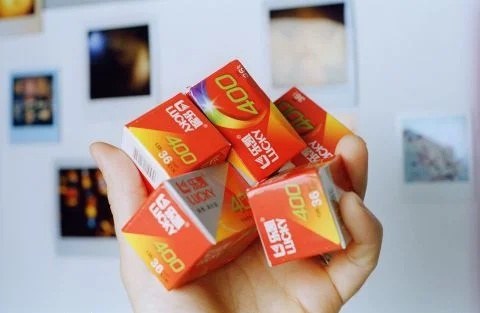
Lucky C400 is positioned as a highly anticipated sequel to China's first color-negative film in over a decade, the Lucky C200. Its fast arrival—pre-production samples surfaced on Douyin a year post-Lucky C200's launch—signaled a speedy development cycle for Lucky Film. However, after processing several rolls over two months, the consensus is clear: it feels like an unfinished product, far from the advertised quality.
Notably, the film was released with the designation Emul. No. 12T42600002, indicating production timing around July 2026, and features instructions for daylight use at ISO 400/27°. This review scrutinizes early commercial prints of Lucky C400, revealing extensive challenges regarding color balance and overall image quality.
The Colors — C-41 & C-41 Stand Development
Color-negative films typically undergo color balancing, whether in a darkroom or digital workflow. Scanners employ inversion software that attempts automatic color correction. However, Lucky C400 deviates from this standard, presenting persistent green casts across all frames, as echoed in numerous reviews.
The initial tests made it evident that correcting these color shifts wasn't straightforward. Although all films require some color correction, Lucky C400 demands an exceptional amount of effort to achieve satisfactory results. This experience starkly contrasts with the earlier Lucky C200, which did not pose comparable challenges.
After laboriously correcting individual frames, there emerged a glimmer of potential. While not matching the skin tone representation of Kodak's offerings, Lucky C400 demonstrated superior color separation and vividness compared to many German-made rivals. The results, however, necessitated considerable tampering—other films typically have issues too, but none approached this level of difficulty.
Stand Development Techniques
Stand development—usually reserved for black-and-white films—was employed in order to explore its efficacy with Lucky C400. This method involves allowing the film to sit in a diluted developer bath for an extended period without agitation. The results suggested that this approach may mitigate some of the blue noise that emerged in shadow areas, although saturation typically decreases.
By testing alternate processing speeds and adapting the stand development method, I achieved improvements. The deep shadows that frequently strained color accuracy appeared much more manageable post-development, enhancing the film's overall quality.
The Colors — ECN-2 Processing
Using the ECN-2 method—designed for motion picture film—produced different results. Initially, this didn't significantly improve the blue cast but did yield a palette that was more manageable overall. Notably, colors appeared vibrant even under less-than-ideal lighting, giving the film character despite its inherent challenges.
Yet, inconsistencies lingered. Minor changes in exposure sometimes caused unexpected color shifts. The variability meant that while some frames captured vivid tones, others remained markedly muted. This unpredictability underscored the need for careful exposure adjustments.
The Colors — ECN-2 with Cooling Lens Filter
After various attempts with color correction, I turned to a **cooling lens filter (82C)** to see if it could ameliorate some of the film's persistent issues. Strikingly, results improved dramatically—the green cast diminished significantly, and the notorious blue noise virtually disappeared.
The positive impact was so pronounced that it prompted further investigation into why such a simple instrument could yield substantial gains in image quality. The filtering successfully mitigated hard-to-correct casts and noise, enhancing the overall integrity of the photographs.
Ultimately, the addition of the lens filter transformed the shooting experience. The processed images exhibited considerably improved color fidelity without requiring extensive color corrections, making the results far more pleasing.
Comparative Analysis and Pricing
While Lucky C400 has been transformative in certain contexts, the reality of its current performance raises concerns about value for money. Priced competitively among similar ISO 400 stock options, it still doesn't reach the reliability of established brands like Kodak or Fujifilm. This inconsistency could discourage potential buyers despite its attractive initial pricing.
Final Thoughts: Worth the Trouble?
Given the unique challenges presented by Lucky C400, performing rigorous testing emerges as crucial. While the film can yield exceptional results—especially with the aid of a cooling filter—its inability to consistently deliver reliable color accuracy may limit its appeal to photographers seeking dependable performance. This film invites enthusiasts to engage in a more experimental process, juxtaposing substantial flexibility against the risk of disappointment.
For those intrigued by the creative possibilities within this film's limitations, it might very well be worth the trial. The journey through its development, scanning, and correction offers insights into personal techniques that could broaden a photographer's approach to color capture.
Where to Buy
Lucky C400 is available through niche suppliers, and enthusiasts should keep an eye on local and online film stocks for availability. Judging its performance against personal expectations and requirements is crucial, as its distinctive characteristics might align perfectly with an adventurous photographic style.