Exploring Kodak High-Speed Infrared Film: Sensitivity, Techniques, and Development Insights
| Shelf | Cameras & Lenses |
|---|---|
| Date in | |
| Readers | 695 |
Kodak High-Speed Infrared Film (HIE) offers unique imaging opportunities with its 900nm sensitivity, but requires careful handling and specific techniques for the best results.
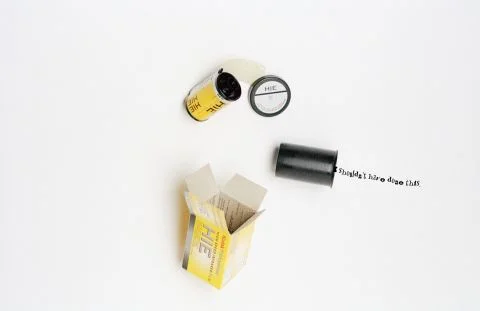
Kodak High-Speed Infrared Film (HIE), a discontinued and expired film, is celebrated for its extraordinary infrared sensitivity, extending up to 900nm. This specific characteristic can produce striking visual effects, allowing elements like grass, leaves, and flowers to appear brilliantly white in photographs. While it's now difficult to source, Kodak HIE remains relatively affordable, with prices for a single 35mm roll estimated to range from $30 to $50 in 2026. Although that might seem steep, it still comes in notably lower than the remaining stock of Aerochrome film and many standard non-infrared films, such as Fujicolor Natura 1600.
This guide discusses essential precautions, the tools necessary for optimal results, metering techniques, and whether Kodak HIE justifies its price in your next photography project. We’ll also weigh its 900nm sensitivity against that of newer alternatives like Rollei Infrared’s 750nm, which presents easier handling for most photographers.
Warning ⚠️.
A critical caution when using Kodak HIE is to avoid exposure to light before loading the film. Following this guideline is vital to maintain the film's integrity. During my tests, my disregard for this warning led to the irreversible fogging of 12 out of 36 frames.
Unlike most films that can handle daylight loading without issue, Kodak HIE requires absolute darkness until the film is inside the camera. This film lacks an anti-halation layer, which usually prevents light from traveling inside the cartridge, making it particularly susceptible to fogging. In my experience, even a brief exposure to bright studio lights ruined a substantial part of one roll.
For context, my two-roll testing, costing roughly $100 including shipping and taxes, yielded frustrating results. The second roll I handled with extreme care ended up mostly unusable due to unforeseen issues, reinforcing the notion of unpredictability in working with expired and discontinued film.
Is Kodak HIE film worth it?
The value of Kodak HIE depends greatly on your artistic goals. While it is indeed pricier and somewhat unpredictable, its unique results can deliver an unparalleled photographic experience. Although my personal output was quite grainy, likely due to the film’s age and sensitivity, there’s potential to offset this by opting for larger formats. 35mm provides limited opportunities to experiment extensively without wasting rolls, but using 4x5 film could enhance your results significantly.
The enhanced sensitivity of Kodak HIE brings saturation to otherwise subdued hues, illuminating leaves distinctively. The necessity of a particular filter with this film—specifically the Wratten 87—eliminates visible light, allowing for a more concentrated infrared exposure. However, the Wratten 87 filter can be challenging to source except as gels, which require creative adaptations for use.
Even at $50 per roll, Kodak HIE is considerably more affordable compared to Kodak Aerochrome, which can be six times the cost. If you’re after distinct imagery and are prepared for the challenges, Kodak HIE is worth considering.
Filter and exposure.
When shooting with Kodak HIE, minimizing visible light is crucial. Unlike modern infrared films that target a mix of wavelengths, this film requires complete exclusion of visible light, making the Wratten 87 filter essential. This filter is entirely opaque to visible wavelengths and allows only infrared light, which is indispensable for this film's successful application.
Finding Wratten 87 in forms other than gels is not easy, but a gel filter holder can be a good workaround. My approach was a DIY solution—using a caliper and a circle-cutting tool—to create a perfect circle that fit inside my transparent UV filter. Precise dimensions were key since affordable gel squares are costly, sometimes ranging from $40 to $70.
Kodak did not provide an official ISO rating for the HIE emulsion nor recommended specific exposure settings, which adds to the complexity of using this film. Based on my research, I settled on an exposure index of around EI 25 using the Wratten 87 filter, beginning my tests from these settings.
Interestingly, the Wratten 87 filter slightly lessens the film’s sensitivity, suggesting an EI of 80 without the filter. Shooting with this film involves considerable guesswork, even after consulting available documentation, but I found some level of predictability in my results.
My attempts to capture light reflecting off foliage while using the suggested settings yielded manageable density in my negatives. The key challenge remained controlling fogging, which I accepted as part of the learning curve.
Developing Kodak HIE with Rodinal.
For development, I chose Rodinal, known for enhancing contrast and presenting grain. While Kodak HIE is marketed as moderately fine-grained, my samples appeared rather coarse. Nonetheless, results matched other evaluations I had analyzed, so I accepted them as a baseline.
To maximize my chances for great images, I modified my developing process: I employed a dilution of 1:50, extended the time to 14 minutes at 17°C (62°F), and agitated every two minutes. The resulting scans reflected satisfactory densities, with clear shadow and highlight retention, albeit with some visible fogging.
Trichromes with Kodak HIE.
Having shot two rolls of Kodak HIE, I learned from my initial mistake of exposing the film to light while loading. For the second roll, I successfully used a changing bag for loading, yet faced new troubles with film quality—storing conditions led to most frames being unscannable. Only a few at the core survived to provide usable images.
From the scannable frames, I attempted a trichrome technique to emulate Aerochrome’s color depth through infrared black-and-white film, utilizing various filters for combining colors. Although my outcome was limited due to the quality issues, I experimented with different color blending methods in Photoshop, adjusting layers to achieve an Aerochrome-like effect.
The method's success varied between color pairs, where complementary color combinations generated slightly better results compared to single-color layers.
Where to buy.
Kodak HIE rolls are relatively accessible on the market, often found on eBay with several listings available at any given time. For reliable purchasing tips, consult my guide on vintage film camera shopping, here.
Your support is immensely appreciated—if you choose to purchase Kodak HIE film using the provided link, a small percentage will go towards maintaining this website, with no extra cost to you.